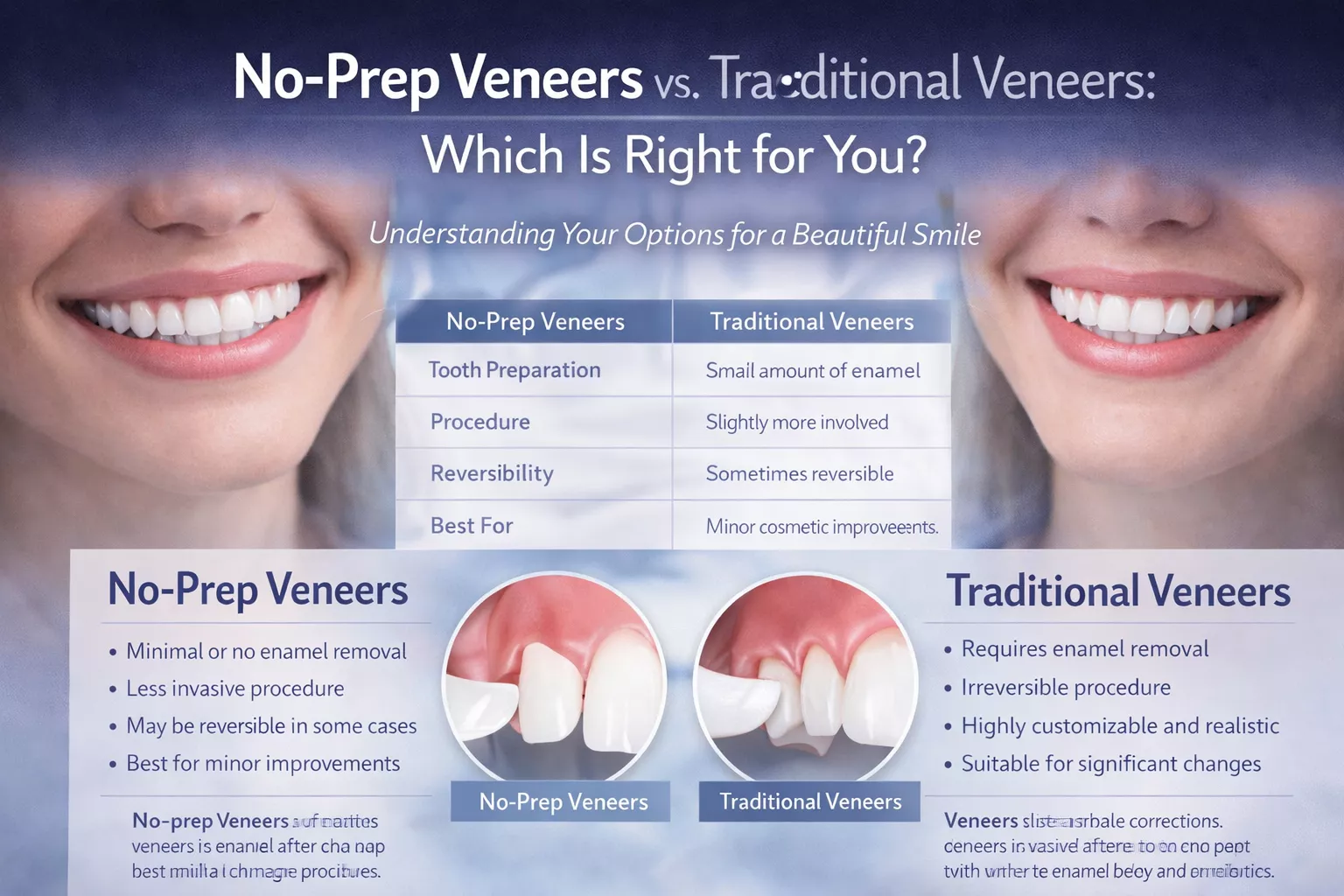
Compare no-prep and traditional veneers, their benefits, differences, and which option may be best for your smile makeover.
A beautiful smile can make a powerful first impression. Many people turn to dental veneers to improve the shape, color, and overall appearance of their teeth. Veneers are thin shells placed on the front surface of teeth to create a more attractive and uniform smile.
Today, patients often face an important choice: no-prep veneers or traditional veneers. Both options can dramatically enhance your smile, but they differ in preparation, durability, and suitability for different dental needs.
If you're considering veneers as part of a smile makeover, understanding the differences between these two options can help you make a confident and informed decision.
What Are Dental Veneers?
Dental veneers are thin, custom-made shells typically crafted from porcelain or composite resin. They are bonded to the front of teeth to correct cosmetic concerns such as:
Gaps between teeth
Minor misalignment
Worn or chipped teeth
Discolored or stained teeth
Uneven tooth shapes or sizes
Veneers are a popular choice in cosmetic dentistry because they deliver natural-looking results while improving overall smile symmetry.
Two common types include traditional veneers and no-prep veneers, each offering unique benefits.
Traditional veneers have been used in cosmetic dentistry for decades and remain one of the most reliable solutions for smile transformation.
Before placing traditional veneers, a dentist removes a small amount of enamel from the front of the teeth. This preparation allows the veneer to sit naturally and prevents teeth from appearing bulky.
After preparation:
Custom veneers are created in a dental lab.
The dentist takes impressions of your teeth.
The permanent veneers are bonded to the teeth.
Temporary veneers may be placed while the final ones are made.
Traditional veneers offer several advantages:
1. Natural Appearance
Porcelain veneers mimic the light-reflecting properties of natural enamel, making them highly realistic.
2. Long-Term Durability
With proper care, traditional porcelain veneers can last 10–15 years or longer.
3. Versatility
They can correct a wider range of cosmetic issues, including moderate discoloration, uneven teeth, and mild alignment problems.
4. Custom Shaping
Because some enamel is removed, dentists can reshape teeth more effectively to create balanced proportions.
While highly effective, traditional veneers have some considerations:
The process may require multiple dental visits.
The procedure is irreversible because enamel is removed.
Some patients may experience temporary tooth sensitivity.
No-prep veneers are a more recent advancement in cosmetic dentistry. As the name suggests, they require little to no removal of enamel before placement.
Popular brands of no-prep veneers include ultra-thin porcelain shells that are designed to bond directly to the surface of the teeth.
The process for no-prep veneers typically involves:
Evaluating your teeth and smile goals
Taking digital scans or impressions
Creating ultra-thin custom veneers
Bonding them to the teeth without significant enamel removal
Because minimal preparation is required, the procedure is often quicker and less invasive.
No-prep veneers offer several appealing advantages:
1. Minimal Tooth Alteration
Little to no enamel is removed, which helps preserve the natural tooth structure.
2. Reversible in Some Cases
Since enamel removal is minimal, the procedure may be reversible for certain patients.
3. Less Sensitivity
Patients are less likely to experience post-treatment sensitivity.
4. Faster Treatment
Some cases can be completed in fewer appointments.
Despite their benefits, no-prep veneers may not be suitable for everyone.
They may appear slightly bulkier if teeth are already large.
They may not provide the same level of reshaping as traditional veneers.
They may not effectively correct significant discoloration or misalignment.
Both types of veneers are designed to look natural. However, traditional veneers often allow for more customization because dentists can reshape the tooth slightly during preparation.
This allows them to:
Correct alignment issues
Adjust tooth proportions
Improve overall smile symmetry
No-prep veneers can still look beautiful, but they work best when the underlying teeth already have good alignment and shape.
No-prep veneers may be ideal for patients who:
Prefer a less invasive procedure
Have small or slightly spaced teeth
Want subtle cosmetic improvements
Have minimal staining or discoloration
Because the natural tooth structure remains mostly untouched, this option appeals to patients who want a conservative cosmetic treatment.
Traditional veneers may be the better option if you have:
Moderately discolored teeth that whitening cannot fix
Teeth that require significant cosmetic reshaping
Minor alignment issues
Chipped or worn teeth
Uneven tooth shapes
In these cases, traditional veneers offer more flexibility to create a balanced and harmonious smile.
Both veneer types can last many years with proper care. Typical lifespan:
Traditional porcelain veneers: 15-20 years
No-prep veneers: 10–15 years depending on care and material
To maintain your veneers:
Brush and floss daily
Avoid biting hard objects like ice or pens
Wear a night guard if you grind your teeth
Visit your dentist regularly for cleanings and checkups
Proper care not only protects your veneers but also keeps your natural teeth healthy.
The cost of veneers varies based on several factors, including:
Number of veneers needed
Dentist’s experience
Geographic location
Material used
In many cases, no-prep veneers and traditional veneers cost a similar amount because both require custom lab fabrication.
While veneers are typically considered cosmetic procedures and may not be covered by insurance, many dental practices offer financing options to make treatment more accessible.
Choosing between no-prep and traditional veneers is not a one-size-fits-all decision. A cosmetic dentist will evaluate factors such as:
Tooth size and shape
Bite alignment
Gum health
Smile symmetry
Your cosmetic goals
Digital smile design and imaging technology can even show you potential results before treatment begins, helping you visualize the outcome.
This personalized approach ensures the final result looks natural, balanced, and long-lasting.
Both no-prep veneers and traditional veneers offer powerful ways to enhance your smile. The best choice depends on your dental condition, aesthetic goals, and how much transformation is needed.
If you're looking for a subtle improvement with minimal alteration, no-prep veneers may be ideal. If you want a more comprehensive smile makeover, traditional veneers often provide greater flexibility and long-term results.
Consulting with an experienced cosmetic dentist is the best way to determine which option will deliver the smile you've always wanted.
Advancements in cosmetic dentistry have made smile transformations more customizable than ever. Whether you choose no-prep veneers for a conservative approach or traditional veneers for a complete smile redesign, both treatments can dramatically improve confidence and appearance.
With expert planning and proper care, veneers can provide a brighter, more balanced smile that lasts for many years.
Schedule a consultation with our cosmetic dentistry team to discover whether no-prep or traditional veneers are the right solution for achieving your ideal smile.
Our experts will create a personalized treatment plan to help you achieve natural, long-lasting results
Book your free smile consultation today and take the first step toward a confident, refreshed smile.
Book Consultation
A smile makeover is more than a cosmetic upgrade—it’s an investment in your confidence and well-being. Discover expert tips to maintain your results for life.
Read More
Discover what a smile makeover really involves, from advanced technology to personalized design, and how art and science create natural, confident smiles.
Read More